Ayodhya Ram Mandir Travel Guide 2026: Complete Tourist Guide

Ayodhya is no longer just a name in ancient scriptures. After the historic inauguration of Ram Mandir in January 2024, this sacred city in Uttar Pradesh has become one of the most visited pilgrimage and tourism destinations in all of India. Millions of devotees, families, and curious travelers now make the journey to Ayodhya every year to witness the grandeur of Ram Mandir and reconnect with the deep spiritual roots of this city.
But planning an Ayodhya trip from scratch can feel overwhelming, especially if it is your first visit. When should you go? How do you reach there? Where should you stay? What are the darshan timings? How much will it cost? This complete Ayodhya travel guide for 2026 answers all of these questions in one place. Each section below gives you a clear overview, and where needed, links to detailed guides are mentioned so you can dive deeper into specific topics.
Whether you are a solo pilgrim, a family traveler, or someone planning a weekend getaway, this guide will help you plan a smooth, fulfilling, and well-organized Ayodhya trip.
About Ayodhya and Ram Mandir – History and Significance
Ayodhya is one of the seven sacred cities (Sapta Puri) of Hinduism and is widely believed to be the birthplace of Lord Ram, the seventh avatar of Lord Vishnu. The city sits on the southern bank of the Saryu River in Faizabad district of Uttar Pradesh and has been a center of religious and cultural significance for thousands of years.
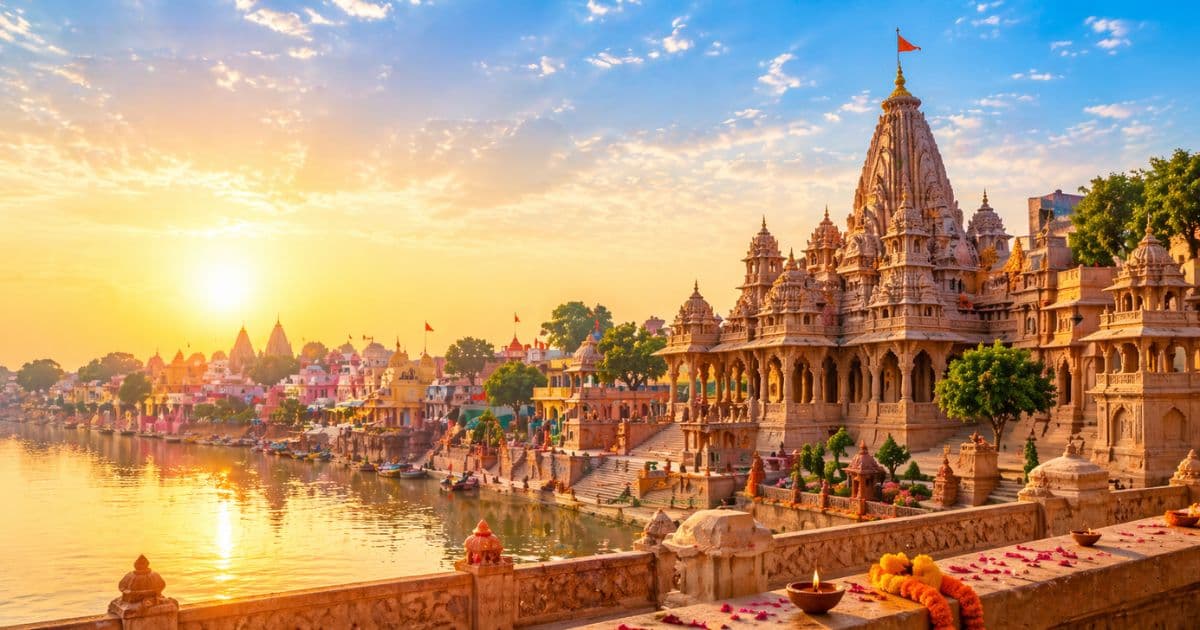
The Ram Mandir, built at the exact site believed to be the birthplace of Lord Ram (Ram Janmabhoomi), was inaugurated on 22 January 2024 in the presence of the Prime Minister of India and spiritual leaders from across the country. The temple is a magnificent structure built in the Nagara style of architecture, featuring intricate stone carvings, a towering shikhar, and a vast temple complex that can accommodate large numbers of pilgrims at any given time.
Beyond Ram Mandir, Ayodhya is home to hundreds of ancient temples, sacred ghats, and spiritual landmarks that draw devotees of different sects and traditions. The city is also closely connected to the Ramayana every street and site here has a story tied to the life of Lord Ram, Mata Sita, Lakshmana, and Hanuman. Visiting Ayodhya is not just a temple visit it is a complete immersion into one of the oldest living civilizations in the world.
Best Time to Visit Ayodhya – Season and Month Guide
Choosing the right time to visit Ayodhya can make a significant difference to your overall experience. The city has a typical North Indian climate with three distinct seasons winter, summer, and monsoon and not all of them are equally suited for a comfortable pilgrimage trip.
The best time to visit Ayodhya is between October and March when the weather is cool, skies are clear, and outdoor temple visits are comfortable. November and February are particularly ideal for those who want a calm experience away from peak festival crowds. December and January are cold but manageable with the right clothing.
The summer months of April to June bring extreme heat with temperatures crossing 42 to 45 degrees Celsius, making long queues and outdoor walks uncomfortable. The monsoon season from July to September brings heavy rainfall and humid conditions, which can disrupt travel plans. Festival periods like Ram Navami and Deepotsav are spiritually electric but come with very large crowds and limited hotel availability.
For more details, read our Best Time to Visit Ayodhya Ram Mandir guide.
How to Reach Ayodhya – Train, Flight, and Road
Ayodhya is well-connected to major cities across India and reaching the city has become significantly easier in the last two years following large-scale infrastructure development. Here is a quick overview of all the ways you can get to Ayodhya for your Ram Mandir visit.
By Train
Train is the most popular and affordable way to reach Ayodhya. The city now has two major railway stations Ayodhya Junction and the newly developed Ayodhya Dham Railway Station, which was inaugurated in December 2023 as a world-class facility built in the architectural style of Ram Mandir. Direct trains connect Ayodhya to Delhi, Mumbai, Varanasi, Lucknow, Prayagraj, Kolkata, and many other cities. Lucknow to Ayodhya takes approximately 2 hours by train and is a popular route for day-trippers and weekend visitors.
By Flight
The Maharishi Valmiki International Airport Ayodhya Dham was inaugurated in December 2023 and now operates regular flights from Delhi, Mumbai, Ahmedabad, and several other cities. Flying is the fastest option for those coming from distant locations. From the airport, the Ram Mandir complex is approximately 8 to 10 kilometers by road.
By Road
Ayodhya is well-connected by road to Lucknow (135 km), Varanasi (200 km), Prayagraj (170 km), and Gorakhpur (140 km). State roadways buses and private buses run regular services. If you are driving, the roads leading to Ayodhya have been significantly upgraded. Parking facilities have been developed at designated points near the temple area.
For detailed route options, bus and train schedules, airport information, and local transport tips within Ayodhya, refer to our complete guide on How to Reach, Best Time & Budget
Ram Mandir Darshan Timing and Entry Rules
Understanding the darshan timing and basic rules of Ram Mandir before your visit helps you avoid confusion and make the most of your time at the temple complex. The temple is open to all pilgrims regardless of caste, religion, or region.
Ram Mandir generally opens for darshan early in the morning and remains open throughout the day with a midday break for ritual activities. The temple has specific aarti schedules including the Mangala Aarti at dawn, the Shringar Aarti in the morning, the Rajbhog Aarti at noon, and the Sandhya Aarti in the evening each of which draws large numbers of devotees. The Sandhya Aarti at sunset is particularly popular.
Entry to Ram Mandir is free of charge. However, mobile phones, large bags, leather items, and food are generally not permitted inside the temple premises. Security checks are thorough. Dedicated bag counters are available outside the complex for storing items. Dress modestly and respectfully avoid sleeveless tops, shorts, or any clothing that is considered disrespectful in a religious space.
For exact timings, aarti schedule, queue management tips, online darshan slot booking, and a complete list of dos and don'ts, read our dedicated guide on Ram Mandir Ayodhya Darshan Timing & Entry Rules
Top Places to Visit in Ayodhya
Ram Mandir is the centerpiece of any Ayodhya trip, but the city has much more to offer. Ayodhya is packed with ancient temples, sacred rivers, and spiritual landmarks that are deeply connected to the Ramayana. Most of these places are within a few kilometers of Ram Mandir and can be covered in a single day or over two comfortable days.
- Ram Janmabhoomi and Ram Mandir: The birthplace of Lord Ram and the main temple the primary destination for every visitor.
- Hanuman Garhi: A 10th-century temple dedicated to Lord Hanuman, located on a hillock with 76 steps leading up to the main shrine. One of the most important temples in Ayodhya and a must-visit before going to Ram Mandir.
- Kanak Bhawan: A beautifully decorated temple dedicated to Lord Ram and Mata Sita, known for its golden crowns on the deities and intricate marble interiors.
- Sita Ki Rasoi: A historic kitchen site associated with Mata Sita, located near the Ram Mandir complex and considered a sacred spot for devotees.
- Saryu River and Ram Ki Paidi Ghats: The banks of the Saryu River are central to Ayodhya's spiritual life. Evening aarti at the ghats is a peaceful and deeply moving experience.
- Dashrath Mahal: The palace of King Dashrath, father of Lord Ram, now a revered temple and historical site.
- Treta Ke Thakur: An ancient temple believed to mark the spot where Lord Ram performed the Ashwamedha Yajna.
- Guptar Ghat: A peaceful ghat on the Saryu River believed to be the spot where Lord Ram took Jal Samadhi. Ideal for quiet reflection away from the main crowds.
For detailed visiting hours, entry information, travel tips, and the best order to cover these sites, read our full guide on Top Places to Visit in Ayodhya
Best Hotels Near Ram Mandir – Stay Options for Every Budget
Ayodhya's hospitality sector has grown rapidly since the Ram Mandir inauguration. Whether you are a budget traveler, a family looking for comfort, or someone seeking a premium experience, there are now stay options available for every type of visitor.
Budget travelers can find affordable guesthouses, OYO-listed properties, and government-run UPTDC tourist bungalows for approximately Rs 500 to Rs 1,500 per night. These are functional and clean, especially if you prioritize location over luxury.
Dharamshalas run by religious trusts and temples offer the most economical stays, often at no charge or a minimal donation. These are best suited for solo pilgrims focused entirely on the spiritual experience.
Mid-range travelers can find comfortable hotels with air conditioning, in-house vegetarian dining, and good proximity to Ram Mandir for Rs 1,500 to Rs 4,000 per night. Several branded properties from FabHotel, Treebo, and similar chains operate in this category.
Luxury stays have also arrived in Ayodhya with premium boutique properties and resort-style accommodation now available for Rs 5,000 and above per night. New luxury hotel projects from national chains are expected to expand options further through 2026.
The best areas to stay are near Ram Path for walking distance access, near Ayodhya Dham Railway Station for transport convenience, or in Faizabad city center for a broader range of facilities. For a full breakdown of recommended properties, price ranges, area guide, and booking tips, read our detailed guide on Hotels Near Ram Mandir Ayodhya
Ayodhya Travel Budget – What to Expect
One of the most common questions from first-time visitors is how much an Ayodhya trip will cost. The good news is that Ayodhya can be done very affordably, as temple entry is free and the city has plenty of budget food and accommodation options.
Here is a rough per-person daily cost estimate for a standard Ayodhya trip:
- Budget trip: Rs 800 to Rs 1,500 per day including basic accommodation, simple meals at local dhabas, and shared transport
- Mid-range trip: Rs 2,500 to Rs 5,000 per day including a decent hotel, restaurant meals, and auto-rickshaw travel
- Comfortable or luxury trip: Rs 7,000 to Rs 15,000 per day including a premium hotel, good dining, and cab travel
Travel costs to and from Ayodhya are separate and depend on your origin city and mode of transport. Train travel is the most economical. Keep in mind that prices for hotels and transport go up significantly during festival periods like Ram Navami and Deepotsav. Booking in advance always helps you get better rates.
Suggested Itinerary for Ayodhya – 1 Day and 2 Day Plans
1 Day Itinerary
A one-day visit to Ayodhya is possible but requires an early start and good time management.
- 5:30 AM to 6:00 AM: Reach Ayodhya and head to Ram Ki Paidi Ghats for morning prayers and a holy dip in the Saryu River
- 6:30 AM to 8:30 AM: Visit Hanuman Garhi for darshan go early to avoid long queues
- 9:00 AM to 12:00 PM: Ram Mandir darshan morning is the best time with shorter queues
- 12:30 PM to 1:30 PM: Lunch at a local vegetarian restaurant or dhaba near Ram Path
- 2:00 PM to 4:00 PM: Visit Kanak Bhawan, Sita Ki Rasoi, and Dashrath Mahal
- 5:00 PM to 6:30 PM: Evening aarti at Ram Ki Paidi Ghats on the Saryu River
- 7:00 PM onwards: Depart or check in for overnight stay
2 Day Itinerary
Two days gives you a much more relaxed and complete experience of Ayodhya.
- Day 1: Morning dip at Saryu, Hanuman Garhi darshan, Ram Mandir darshan, Kanak Bhawan, Sita Ki Rasoi, evening aarti at the ghats
- Day 2: Early morning Mangala Aarti at Ram Mandir, Treta Ke Thakur, Dashrath Mahal, Guptar Ghat, Ram Katha Park, local market shopping for prasad and religious items, afternoon departure
Important Travel Tips for Ayodhya Visitors
Crowd Management Tips
Ayodhya sees heavy footfall throughout the year, especially on weekends and during festivals. Visit on weekdays if your schedule allows Tuesday through Thursday are the least crowded days. Arrive at the temple complex before 7 AM for the shortest queues. Avoid Saturdays, Sundays, and public holidays unless you are prepared for long waiting times.
Safety and Health Tips
Carry a valid government-issued photo ID at all times as security checks are thorough. Keep your mobile phone charged and store emergency contacts. Carry a small water bottle, especially in summer and during long temple queues. If you are traveling with elderly family members or young children, plan for extra rest time and avoid the hottest part of the day for outdoor visits. Be aware of pickpockets in crowded areas near the temple and ghats.
Booking Tips
Book your train tickets and hotels well in advance, particularly if you are visiting between October and March or around a major festival. Accommodation near Ram Mandir fills up very fast. Confirm the exact location of your hotel on Google Maps before finalizing. Always use trusted booking platforms and read recent guest reviews before making a reservation.
General Etiquette
Ayodhya is a deeply religious city. Dress modestly and respectfully at all times. Avoid loud behavior near temple premises. Do not litter especially on the ghats and around the temple complex. Photography inside the main sanctum sanctorum of Ram Mandir is restricted, so always follow the instructions of temple security.
Conclusion: Plan Your Ayodhya Trip with Confidence
Ayodhya is a destination unlike any other in India. It carries the weight of thousands of years of history, the joy of a newly completed Ram Mandir, and the spiritual energy of millions of devotees who visit it every year. Whether you come as a pilgrim seeking divine blessings, a history enthusiast wanting to understand the roots of one of the world's oldest cultures, or a traveler simply curious about the spiritual capital of India Ayodhya will leave a lasting impression.
This Ayodhya travel guide has given you a solid overview of everything you need to know from when to visit and how to get there, to darshan tips, stay options, itinerary ideas, and practical travel advice. Use the detailed guides linked throughout this article to dive deeper into each topic and plan every aspect of your trip carefully.
The one universal advice from every seasoned Ayodhya traveler: plan ahead, book early, and go with patience. The queues may be long and the city may be crowded, but the moment you stand before Ram Lalla in that magnificent temple, every bit of effort feels completely worth it. Jai Shri Ram.
Frequently Asked Questions
Find answers to common questions
About the Author
Travel enthusiast and digital content creator passionate about exploring destinations, travel tips, itineraries, and hidden gems around the world through practical and easy-to-follow travel guides.