Thailand Packing List for Indian Travelers – Checklist & Tips
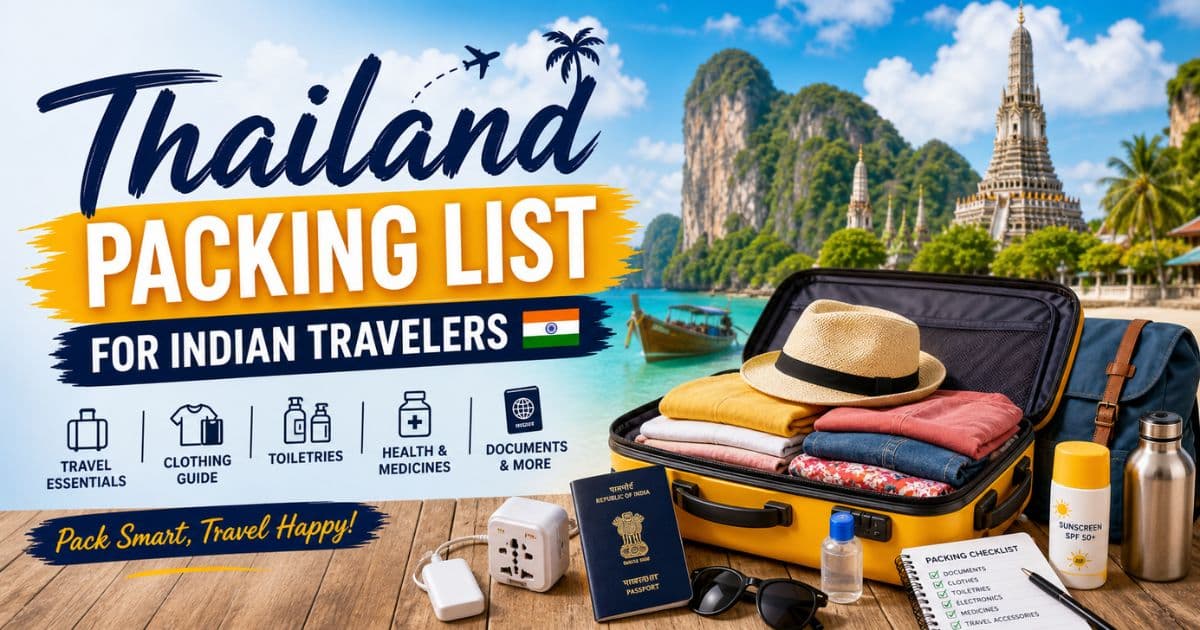
Getting your Thailand packing list for Indian travelers right can make a huge difference to how smooth and enjoyable your trip is. Pack too much and you are lugging around a heavy bag in 35-degree heat. Pack too little and you end up buying basics at inflated tourist prices. Thailand has a tropical climate, a mix of cultural and beach activities, and specific dress code rules at temples all of which affect what you should carry.
This guide covers everything you need to pack for a Thailand trip from India clothes, documents, medicines, gadgets, money tips, and what to leave behind. Whether you are going for 7 days or planning a full Thailand Itinerary 2 Weeks, this checklist will help you travel light, smart, and stress-free.
Thailand Weather and Packing Basics
Thailand has a tropical climate, which means it is hot and humid for most of the year. Average temperatures range from 28°C to 38°C across the country, depending on the region and season.
From November to February, the weather is slightly cooler and more comfortable especially in the north around Chiang Mai. From March to May, it is extremely hot. June to October is monsoon season, when afternoon rain showers are common, particularly on the Andaman coast.
What this means for packing is simple: go light, go breathable, and go practical. Heavy cottons, denim, and synthetic fabrics will make you uncomfortable very quickly. The goal is to stay cool, dry fast, and feel comfortable all day.
Essential Travel Documents
Before you even think about clothes and toiletries, make sure your documents are fully in order. Missing or incorrect documents can ruin your trip before it starts.
- Passport Must be valid for at least 6 months beyond your travel date. Check the expiry date well in advance.
- Visa exemption or visa on arrival Indian passport holders currently receive a visa exemption for Thailand for stays up to 60 days (as of 2025). No prior visa application is needed, but always check the latest rules before you fly.
- Return flight tickets Immigration officials may ask for proof of onward travel. Always carry a printed or digital copy of your return booking.
- Hotel bookings Print or save confirmation emails for your first few nights at minimum.
- Travel insurance Strongly recommended. Medical care in Thailand can be expensive for foreigners without insurance. A basic travel insurance policy covering medical emergencies costs very little and is worth every rupee.
- Printed and digital copies Keep scanned copies of your passport, visa, and bookings saved on your phone and emailed to yourself. Store physical copies separately from originals.
Clothing Packing List for Thailand
Everyday Clothing
The key to dressing well in Thailand is lightweight, breathable fabric. Linen, cotton, and moisture-wicking materials are your best friends in the heat.
- 5 to 6 lightweight t-shirts or tops
- 2 to 3 pairs of shorts or casual trousers
- 2 to 3 lightweight dresses or skirts (for women)
- 1 to 2 comfortable walking outfits for city days
- Comfortable innerwear bring enough for the full trip as laundry may not happen every day
Avoid dark colours where possible they absorb heat. Light pastels, whites, and neutrals keep you cooler and look great in photos.
Temple Dress Code (Very Important)
This is one area where many Indian tourists get caught off guard. Temples across Thailand and there are hundreds of them require visitors to dress modestly. If you show up in shorts and a tank top, you will be turned away or asked to buy a wrap at the entrance.
- At least 2 outfits that cover your shoulders and knees
- A lightweight scarf or shawl that can double as a temple wrap
- Loose long pants or a long skirt that can be packed easily
Indian travelers actually have an advantage here a salwar kameez or kurta works perfectly for temple visits and is very comfortable in the heat.
Beachwear
If you are heading to Phuket, Krabi, Koh Samui, or any of the islands, beach essentials are a must.
- 1 to 2 sets of swimwear
- Light beach cover-up or sarong
- Flip-flops dedicated to beach and pool use
Rain Essentials
Even during the dry season, brief rain showers can occur. During monsoon months, rain is almost guaranteed in the afternoons.
- A light, packable rain jacket or poncho
- A compact travel umbrella
Avoid heavy waterproof jackets they are too hot for Thailand's climate. A thin poncho folds into almost nothing and works perfectly.
Footwear Essentials
Footwear is one of the most important packing decisions for Thailand. You will be walking a lot, removing shoes at temple entrances multiple times a day, and switching between city streets and beaches.
- Comfortable walking shoes One pair of lightweight trainers or walking shoes for full city days, markets, and national parks.
- Flip-flops Essential for beaches, boat trips, hostel showers, and casual evenings. Bring a pair you do not mind getting wet.
- Sandals A good pair of supportive sandals (like Birkenstocks or similar) works well for daily sightseeing when you want something more than flip-flops but lighter than trainers.
Three pairs of footwear is plenty. Do not pack more shoes take up a huge amount of luggage space.
Toiletries and Personal Care
Thailand has 7-Eleven stores and pharmacies almost everywhere, so you can easily buy most toiletries on arrival. That said, some specific products are worth bringing from India.
- Sunscreen (SPF 50 or higher) This is the single most important toiletry for Thailand. The sun is intense. Apply every 2 hours when outdoors. Good quality sunscreen is available in Thailand but is expensive, so bring enough from India.
- Moisturizer Air conditioning in hotels and malls can dry out your skin quickly.
- Shampoo and conditioner (travel-size) Full-size bottles are unnecessary. Most hotels provide these, and convenience stores stock them cheaply.
- Deodorant Bring your preferred brand as Indian deodorants may not be available. Use it generously in the heat.
- Wet wipes and tissues Indispensable for street food, public transport, and beach days. Some public toilets in rural areas may not have paper.
- Basic grooming items Razor, face wash, lip balm, and anything specific to your skincare routine.
Electronics and Gadgets
Thailand uses Type A and Type B power sockets (flat two-pin plugs), which are different from India's round three-pin sockets. Pack accordingly.
- Mobile phone Your most essential device for maps, translation, Grab bookings, and communication.
- Power bank A 10,000mAh to 20,000mAh power bank is worth its weight in gold on long sightseeing days when you cannot find a socket.
- Universal travel adapter One compact universal adapter covers all socket types and is a must-pack for every international trip.
- Charging cables for all your devices Bring spares if possible.
- Camera (optional) A mirrorless camera or a good-quality phone camera is sufficient for most travelers. GoPro or waterproof camera is worth considering if you plan to do snorkeling, diving, or kayaking.
- Earphones or earbuds For flights, long bus rides, and tuning out on the beach.
Health and Medicines (Important for Indians)
This section is particularly important for Indian travelers, as stomach upsets and heat-related issues are common when adjusting to a new climate and unfamiliar food. Always carry a basic medicine kit from India rather than relying on finding specific brands abroad.
- Fever and cold medicine Paracetamol, cetirizine, or your preferred brand.
- Diarrhoea and stomach medicine Imodium, ORS sachets, and antacids. Street food is delicious but can sometimes cause stomach issues if your system is not used to it.
- ORS packets Dehydration is a real risk in Thailand's heat, especially if you are active. Mix ORS with bottled water and drink it after heavy activity days.
- Motion sickness tablets If you are taking ferries between islands, pack motion sickness medication. Some of the speedboat rides in choppy weather can be rough.
- Personal prescription medicines Carry enough for your full trip plus a few extra days. Bring a copy of your prescription in case of any queries at customs.
- Mosquito repellent A good DEET-based repellent or a natural alternative. Dengue fever is present in Thailand, so this is not optional. Apply at dawn and dusk especially.
- Hand sanitizer Small travel-size bottle for use before street food and in places without easy access to soap and water.
- Band-aids and antiseptic cream For minor cuts, blisters from walking, or coral scrapes at the beach.
Travel Accessories You Should Not Forget
- Daypack or small backpack A lightweight 15 to 20 litre daypack for carrying your daily essentials sunscreen, water, camera, and documents while sightseeing.
- Packing cubes These are game-changers for staying organised inside your main bag. Separate cubes for clothes, toiletries, and electronics make packing and unpacking much faster.
- Sunglasses The Thai sun is harsh. A good pair of UV-protective sunglasses is essential, not just a fashion accessory.
- Hat or cap A wide-brim hat or a cap provides real protection during long outdoor days at temples, markets, or beaches.
- Reusable water bottle Staying hydrated in Thailand's heat is critical. A refillable bottle saves money and reduces plastic waste. Many hotels and restaurants have water dispensers for refills.
- Neck pillow If you are flying from India, the flight to Bangkok is typically 3 to 5 hours. A compact inflatable neck pillow makes a big difference on overnight or early morning flights.
- Small padlock Useful for locking hostel lockers or securing your bag on overnight trains.
Money and Currency Tips
Thailand uses the Thai Baht (THB). As a rough guide for Indian travelers, 1 THB is approximately 2.3 Indian Rupees as of 2025. This means things feel affordable a street food meal costs about 60 to 100 THB, and a tuk-tuk ride is 50 to 150 THB for short distances.
- Carry some cash Many street food stalls, local markets, and smaller guesthouses are cash-only. Always have at least 1,000 to 2,000 THB on you for daily expenses.
- Forex card or international debit card Cards like Niyo Global, HDFC Forex, or a Wise card give you good exchange rates with low fees. Use these at ATMs or for hotel and restaurant payments.
- ATM withdrawals Thai ATMs charge a flat fee of around 220 THB per withdrawal regardless of the amount, so withdraw larger amounts at once rather than making multiple small withdrawals.
- Where to exchange money Exchange money at banks or authorised money changers in the city. Avoid hotel front desks and airport counters, which offer poor rates. SuperRich and Vasu Exchange are popular in Bangkok for good rates.
- Digital payments Grab (taxi and food delivery app) accepts international cards. Many malls and larger restaurants now accept Visa and Mastercard. However, always have a backup in cash.
What NOT to Pack
Knowing what to leave behind is just as important as knowing what to bring.
- Heavy clothing Jeans, thick hoodies, and formal wear are almost never needed in Thailand. Leave them at home. Even upscale restaurants in Bangkok are relatively casual.
- Too many shoes Three pairs maximum. Any more and you are wasting valuable luggage space.
- Expensive jewellery Leave valuables at home. Wearing flashy jewellery makes you a target for theft, especially in crowded tourist areas.
- Full-size toiletry bottles Buy travel sizes or decant into small containers. Full bottles take up space and add unnecessary weight.
- Restricted items Thailand has strict laws on drugs, e-cigarettes, and vapes. E-cigarettes are actually illegal to bring into Thailand and can result in fines or arrest. Do not risk it.
- Too many books or heavy reading material Use a Kindle app or e-reader instead. Physical books are heavy and there is no shortage of English-language bookshops and book exchanges in Thailand if you finish reading.
Thailand Packing Checklist (Quick Summary)
Use this as your final check before zipping up your bag:
- Passport (valid 6+ months) and visa documents
- Return flight tickets and hotel booking confirmations
- Travel insurance documents
- 5 to 6 lightweight t-shirts or tops
- 2 to 3 shorts, trousers, or skirts
- 2 temple-appropriate outfits (covering shoulders and knees)
- 1 to 2 sets of swimwear
- Light rain jacket or poncho
- Walking shoes, flip-flops, and daily sandals
- Sunscreen (SPF 50+)
- Mosquito repellent
- Basic medicine kit (fever, stomach, ORS, motion sickness)
- Personal prescription medicines
- Mobile phone, power bank, travel adapter
- Daypack for sightseeing days
- Sunglasses and hat
- Reusable water bottle
- Packing cubes
- Forex card or international debit card
- Thai Baht cash (change some before departure or at Bangkok airport)
Packing Tips for Indian Travelers
A few final practical tips that are particularly relevant for travelers coming from India:
- Travel light Most airlines on the India-Thailand route (IndiGo, Air India, AirAsia) have a 20 to 25 kg check-in allowance. But carrying less means easier movement through airports, ferries, and guesthouses. Aim to keep your main bag under 15 kg if possible.
- Laundry is easy and cheap in Thailand Almost every guesthouse area has a laundry service that charges by the kilo. You can have a full bag of clothes washed, dried, and folded for 100 to 150 THB. This means you do not need to pack for every single day plan for 5 to 7 days of clothing and launder midway through your trip.
- Indian food availability If you are worried about spice levels, do not be. Thai food itself is quite spicy, and Indian restaurants are plentiful in Bangkok, Phuket, and Chiang Mai. That said, Thai street food is so good that most Indian travelers end up eating it every day.
- Respect Thai culture Dress modestly at temples, remove shoes when requested, speak softly inside religious sites, and never raise your voice in public. Thais are deeply respectful people and appreciate visitors who make the same effort.
- Buy local where possible Cheap clothing, sarongs, and accessories are sold everywhere in Thailand. If you forget something, you can almost always find it locally and at very affordable prices. This is another reason not to overpack.
If you found this guide useful, explore our Southeast Asia Travel Guide for more detailed destination planning, including Bali, Vietnam, and Sri Lanka itineraries.
Final Thoughts
Packing for Thailand does not need to be complicated. The golden rule is to keep it light, keep it breathable, and focus on the essentials. A well-packed bag means less stress at the airport, easier movement between cities, and more room for the beautiful things you will want to bring home.
For Indian travelers especially, the good news is that almost anything you forget can be bought inexpensively in Thailand. So do not let packing anxiety stop you from booking that flight. Get the documents right, sort your sunscreen and medicines, and let Thailand do the rest.
Start packing your bags and book that Thailand trip an unforgettable adventure of temples, beaches, and incredible food is waiting for you.